A Leprechaun Dragon's Charm for Personalized Gifts
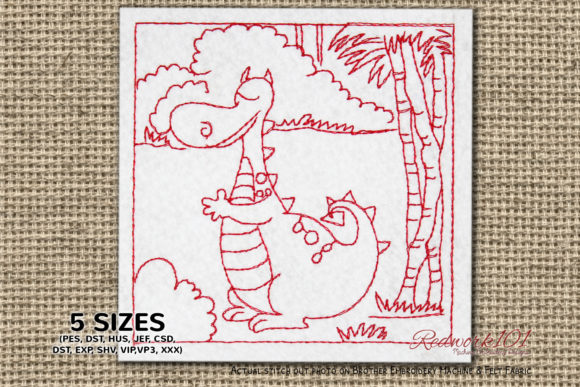
As an embroidery designer planning products for a gift shop, my first task is always to visualize how a new design will translate from screen to stitch, and ultimately, to a customer’s hands. Today, I’m reviewing the Leprechaun Dragon in Forest Redwork for this exact purpose. This machine embroidery design presents a whimsical, narrative scene: a dragon standing in a lush forest, flanked by coconut trees, surrounded by jungle greenery. The immediate impression is one of playful charm and storybook fantasy. It feels handmade, sweet, and curiously elegant—a blend of mythical creature and natural serenity that sparks an emotional connection.
Where This Design Finds Its Home
The charm of the Leprechaun Dragon is its versatility for personalized gifts. Its mood isn’t overtly seasonal, making it a classic choice for year-round projects. For baby embroidery, it would be enchanting on a nursery wall hanging or a lightweight blanket. The scene evokes a gentle, protective guardian, perfect for a baby product. As a wedding gift, embroidered on a pillow cover or a keepsake towel, it could symbolize the magical beginning of a new family adventure. For everyday handmade products, imagine it on a custom apron for a fantasy-loving cook, or a sturdy tote bag for a book lover.
The design’s detail level—with the dragon, trees, and greenery—creates a finished piece that feels substantial and thoughtful. This increases its perceived value immensely. An Etsy seller or craft fair vendor could use it to create standout pillow covers, embroidered towels, or blanket embroidery that tell a story. For digital product sellers, offering this as a digital embroidery file alongside printable mockups allows customers to preview how it would look on a custom embroidery item like a kitchen towel or a nursery item. The emotional appeal is its strongest asset: it’s not just a decoration; it’s a tiny, stitched fairy tale.
Crafting Considerations for a Perfect Finish
While the design is charming, a professional review always involves noting where caution is needed. The description mentions “The Box Stitch shown in the picture is optional. The color of the outer Box is a differ.” This indicates there may be framing elements or borders to consider. For successful application, we must think about the end product’s physical properties.
On small lettering or extremely delicate details within the forest greenery, stitch density should be checked on scrap fabric first to ensure clarity. Embroidering on textured fabric or thick towels requires a robust stabilizer to hold the intricate scene. For stretchy baby clothes, careful hooping and stabilization are paramount to prevent distortion. Applying it to curved surfaces like a cap would require testing to see if the panoramic forest scene adapts well.
A key test is comparing light and dark fabric mockups. The redwork style (typically implying a single color or limited palette) suggests checking thread color contrast against the background. On dark fabric, you might need a brighter or contrasting thread to maintain visibility. After stitching, always check small details after stitching—like the definition between the dragon and the trees—to ensure the story reads clearly.
Practical Steps Before Your First Stitch
Before running this embroidery file for a real customer order, my standard protocol applies:
- Test on scrap fabric identical to the final product material.
- Confirm hoop size requirements with the design provider; the forest scene may require a larger area.
- Review stitch density across the greenery to ensure it’s suitable for delicate fabrics like baby blanket gauze.
- Use proper stabilizer based on the final product—a tear-away for a pillow cover, a cut-away for a towel that will undergo frequent washing.
- If you plan to sell the finished products, confirm commercial licensing before selling. This is crucial for small shop products and commercial embroidery.
Why This Design Enhances Your Gift Business
From a product planning perspective, the Leprechaun Dragon in Forest Redwork significantly boosts giftability. Its unique theme—a Wild Animals twist with fantasy—attracts a specific customer: those seeking a meaningful, non-generic gift. It builds customer trust by showcasing handmade quality and attention to detail. In product photography, the intricate scene creates visual interest and depth, improving buyer engagement in online listings.
The design fits beautifully into categories like family keepsakes or wedding gifts because it feels personalized even before a name is added. Its playful yet elegant nature allows it to cross from a child’s baby embroidery item to an adult’s custom tote bag. For the maker, it’s a rewarding Embroidery project that results in a finished product with strong emotional resonance, making it easier to communicate its value to the end buyer.
In the end, my review finds this design to be a robust candidate for a personalized gift shop’s lineup. Its charm is its engine. By taking the practical steps to adapt it to each product type—mindful of fabric texture, washability, and detail preservation—you can transform this digital file into a tangible piece of magic that customers will cherish. Always remember to verify any unspecified details like exact thread count or optional elements directly with the design source before proceeding to production. But for those seeking a design that stitches a story, the Leprechaun Dragon waiting in its forest is a delightful find.