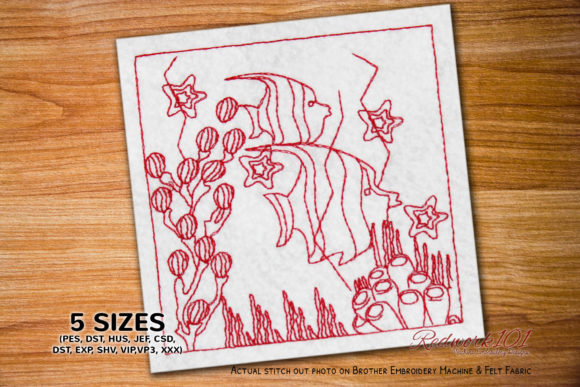
A Handcrafted Review of Yellow Angelfish in the Sea Bluework
As an embroidery designer prepping for a craft fair, every design choice is a business decision. You’re looking at a digital embroidery file not just for its beauty, but for its sellability, its production practicality, and its ability to turn heads on a crowded market table. Today, I’m reviewing Yellow Angelfish in the Sea Bluework from that exact perspective: how does this marine-themed design translate into real-world, handmade products that people will actually buy?
The First Impression: A Bold & Decorative Statement
Two angelfish roaming among sea trees and starfish immediately suggests a scene, not just a motif. This isn’t a minimal or farmhouse style; it’s a decorative and bold narrative piece. The vibrant yellow against the implied sea blues creates a focal point that feels both playful and premium. For customers scanning a booth, this kind of design stands out because it tells a little story. It’s neither overly cute nor purely elegant—it occupies a lovely middle ground of being visually engaging and rich in detail, which can elevate the perceived value of a simple product.
Where This Design Shines on Your Product Table
Let’s walk through your potential craft fair inventory and see where Yellow Angelfish in the Sea Bluework would be a star performer.
Textile Home Goods & Wearables
For tote bags and market bags, this design is a winner. Its size and complexity make it a perfect large focal point on a bag’s side or front panel, transforming a utilitarian item into a piece of art. On aprons, particularly the bib area, it offers that decorative, personalized touch that home cooks love. As a pillow cover design, it would be stunning, especially on a solid linen or cotton backdrop, creating a premium, handmade home décor item.
Smaller Giftables & Accents
This design’s detail means it also scales down well for more intimate products. On a tea towel, positioned as a decorative band near the bottom, it adds significant value beyond a plain towel. A small fabric pouch with this design embroidered on the flap becomes a special gift. The key is ensuring the design area isn’t too dense for the towel’s texture or the pouch’s smaller size.
The Embroidered Patch Opportunity
Turning this into an embroidered patch is a brilliant move. The defined scene—fish, trees, starfish—makes for a complete, standalone patch that can be sold separately or applied to jackets, backpacks, or hats. This opens up your market beyond your finished products to DIY crafters.
Caps and Curved Surfaces
Embroidering on caps requires careful consideration. The curved, often textured surface can challenge designs with many small elements. While the angelfish themselves could work beautifully on a cap front, the potential “sea trees” and starfish details might lose clarity if the design is reduced too much. A test on a scrap cap fabric is essential here.
Practical Production & Selling Points
Now, let’s talk about the realities of getting this from a digital embroidery file to a stack of products in your booth.
Visual Clarity & Customer Comprehension
At a glance, customers will easily understand this as a “fish in the sea” scene. This instant recognition is vital for fast craft fair decisions. It doesn’t require explanation; its appeal is direct. This makes it excellent for both online listings (Etsy seller photos need to capture that clarity) and in-person displays.
Photographing for Online Sales
The contrast between the yellow angelfish and likely blue elements will photograph well, especially on lighter fabrics. For your Etsy listings and printable mockups, ensure you photograph the actual stitch work on a real product. The texture and dimension of the embroidery will sell the handmade quality far better than a digital preview alone.
Batch Production & Repeatability
This design feels repeatable. It’s a cohesive scene, not a random pattern, so producing multiple tote bag designs or tea towel embroideries with it maintains consistency and strengthens your brand look at the fair. However, the note about an optional “Box Stitch” frame and a different color outer box is crucial. You must check the actual embroidery file to understand this element. Is it a simple border that speeds up framing the design, or does it add complexity? This affects your production time and stitch density.
Careful-Use Notes for a Professional Finish
To ensure every product feels premium and avoids common pitfalls, keep these designer notes in mind.
- Stitch Density & Fabric Choice: Scenes with multiple elements can lead to denser stitch areas. Always test on scrap fabric first, especially on textured towels or thick canvas for bags. Use the correct stabilizer to prevent puckering.
- Small Details & Scaling: The “trees at the bottom of the sea” and starfish could involve fine details. If you plan to shrink the design for a smaller product like a pouch, test to ensure these details remain clear and don’t become muddy.
- Thread Contrast & Fabric Color: The described yellow angelfish will pop on light fabrics. On dark fabric, you’ll need to verify the thread color palette in the file to ensure overall visibility. A high-contrast mockup is key.
- Hoop Size & Practicality: Confirm the design’s dimensions from the file to choose the right hoop size for your target products. A design meant for a large tote might require a larger hoop than you typically use for tea towels.
- The Ultimate Rule: Create a Real Mockup Before batch production, embroider Yellow Angelfish in the Sea Bluework on one actual tote bag, towel, and patch. This reveals everything: thread tension, color interaction on real material, and the final tactile appeal that sells the product.
Turning a File into Booth Success
Ultimately, Yellow Angelfish in the Sea Bluework is a design with strong visual appeal that can command customer attention and increase product value. Its narrative quality encourages buyer engagement—people might point at it, comment on the fish, or connect with the marine theme. For your booth display strength, consider using it on a variety of products to show its versatility, but make one item—like a standout pillow or a beautifully embroidered apron—your hero piece to draw people in.
As a final, critical step for any small shop product or commercial embroidery: always confirm the commercial licensing terms of the digital embroidery file before selling finished products. This protects your business and ensures your craft fair hustle is built on a solid foundation. With careful testing and a focus on products where its decorative boldness shines, Yellow Angelfish in the Sea Bluework can be a delightful and profitable addition to your handmade collection.